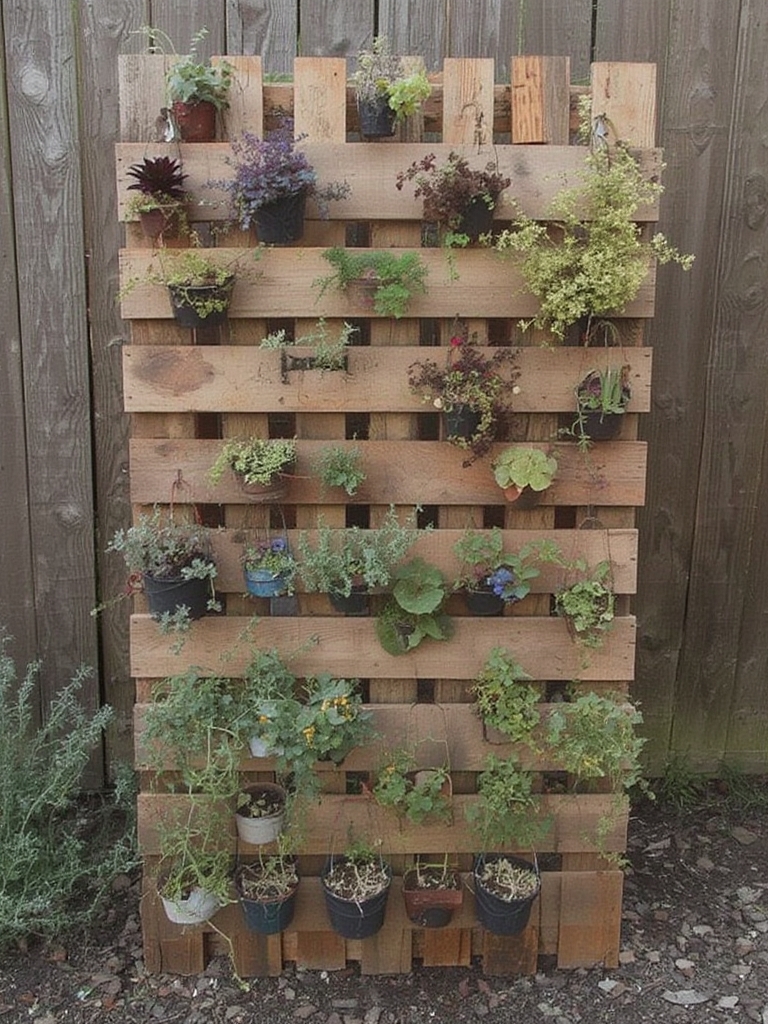
Are you struggling with limited gardening space but still dream of growing your own plants? A DIY vertical pallet garden might be exactly what you need! This ingenious gardening solution transforms ordinary wooden pallets into beautiful living walls
that maximize your growing area while adding a rustic, eco-friendly aesthetic to any space. Whether you have a tiny balcony, a small backyard, or just want to add visual interest to a blank wall, vertical gardening allows you to grow more in less space while creating a stunning visual focal point.
Table of Contents
20 Stunning DIY Vertical Pallet Garden Ideas to Maximize Your Growing Space
Materials & Supplies
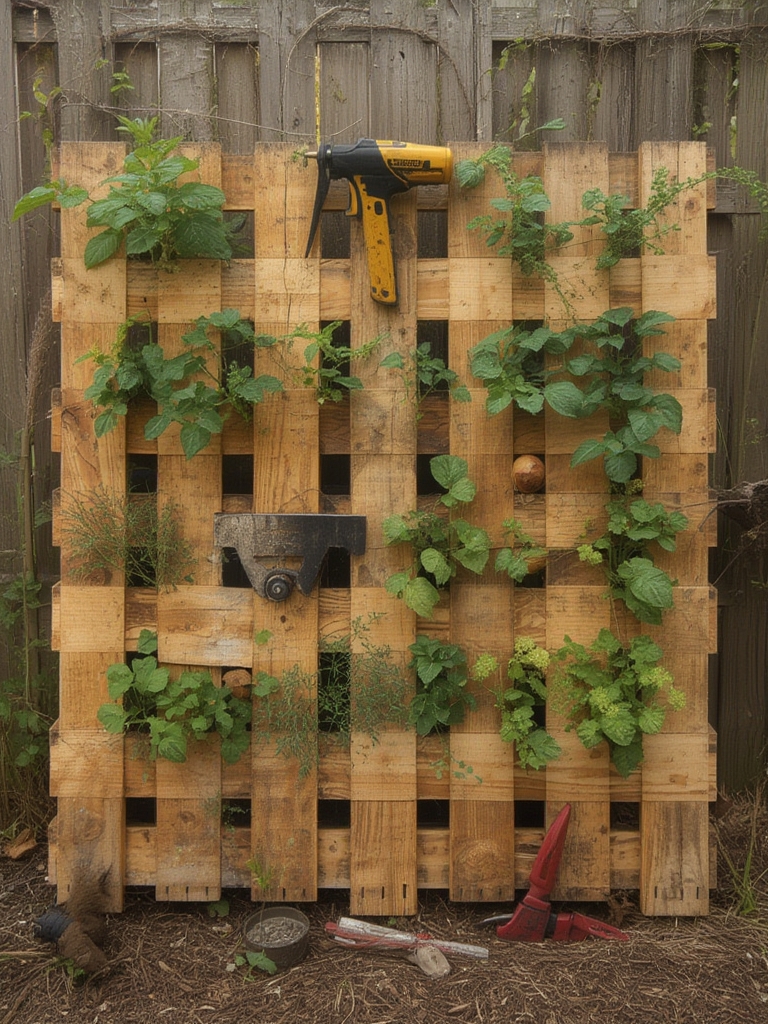
To create your own vertical garden ideas, pallet planter wall, space saving garden, wooden pallet projects, living wall garden, you’ll need:
- 1-2 wooden pallets (heat-treated, not chemically treated)
- Electric sander or sandpaper (80-120 grit)
- Hammer and pry bar (for disassembling if needed)
- Landscaping fabric or weed barrier cloth
- Heavy-duty staple gun and staples
- Potting soil (lightweight, well-draining mix)
- Selection of plants suitable for vertical growing
- Power drill with various drill bits
- Screws (weather-resistant, various sizes)
- Paint or wood stain (optional, exterior-grade)
- Paintbrush (if painting/staining)
- Garden hose or watering can with fine nozzle
- Level and measuring tape
- Wall mounting hardware (brackets, screws, anchors)
Timing / Growing Schedule
Preparing a vertical pallet garden takes approximately 1-2 weekends from start to finish. The initial assembly and preparation require about 4-6 hours, while the planting process takes 1-2 hours depending on the complexity of your design. Allow an additional 2-3 weeks for plants to establish roots before hanging vertically if you’re starting with new plants. For optimal results, begin this project in spring or early summer when plants have the entire growing season ahead to establish themselves.
Step-by-Step Instructions
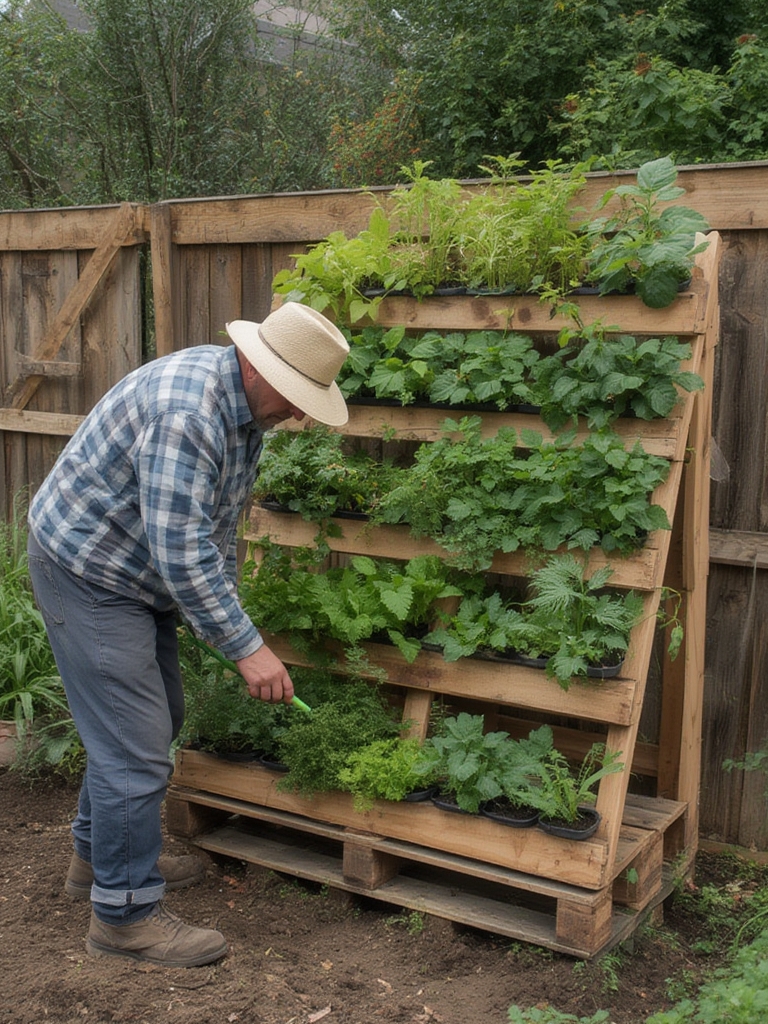
Select and prepare your pallet: Choose a solid pallet with minimal damage and no chemical treatments (look for “HT” stamp for heat-treated). Sand all surfaces to remove splinters and rough spots, focusing on areas that will be handled frequently.
Decide on orientation: Determine whether you’ll plant between the slats (easier but less soil depth) or create deeper pockets by attaching boards to the back (more complex but better for larger plants).
Add backing: For the standard approach, cut landscaping fabric to size, leaving 8-10 inches extra on all sides. Staple it to the back and bottom of the pallet, creating pouches between slats. Double or triple layer the fabric for durability.
Create drainage: Drill several ¼-inch drainage holes through the fabric at the bottom of each planting section to prevent waterlogging.
Add soil: With the pallet laying flat (fabric side down), fill the spaces between slats with potting soil, packing firmly but not compressing too much.
Plant selection and placement: Start with shallow-rooted plants like succulents, herbs, lettuce, strawberries, or small flowering plants. Position taller plants at the back/top and trailing varieties at the front/bottom for best visual impact.
Initial watering: Water thoroughly but gently, allowing soil to settle. Add more soil if needed after initial watering.
Establishment period: Keep the pallet horizontal for 2-3 weeks, allowing plants to root securely before hanging vertically.
Mounting: Secure to a wall or fence using appropriate brackets and anchors, ensuring it can support the considerable weight when wet.
Advantages
Creating a vertical pallet garden offers numerous benefits beyond space efficiency. These living walls act as natural insulators, cooling buildings in summer while providing habitat for beneficial insects. They reduce noise pollution, improve air quality, and can even grow enough herbs and small vegetables for regular kitchen use. Additionally, repurposing pallets diverts waste from landfills, making this an environmentally conscious choice.
Tips and Alternative Methods
- For a more finished look, paint or stain your pallet before planting, using only eco-friendly products safe for growing food.
- Consider installing a simple drip irrigation system for consistent watering, especially in hot climates.
- For indoor vertical gardens, use a moisture barrier between the pallet and wall, and select shade-tolerant plants.
- Create a freestanding design by connecting two pallets back-to-back for a room divider effect.
- Incorporate solar-powered fairy lights for an enchanting evening display.
Common Mistakes to Avoid
- Insufficient drainage: Without proper drainage holes, plants will suffer from root rot.
- Overplanting: Resist the temptation to overcrowd; plants need space to grow.
- Inadequate support: Failing to properly anchor your garden can lead to collapse as plants and soil add significant weight.
- Using chemically treated pallets: These contain harmful substances that can leach into your plants.
- Improper watering: Vertical gardens dry out faster than horizontal beds and require consistent monitoring.
Maintenance Tips
Water your vertical garden more frequently than conventional gardens, as they dry out faster. Check moisture levels every 2-3 days during growing season and daily during hot weather. Feed plants with diluted liquid fertilizer monthly during active growth. Regularly trim dead leaves and spent blooms to encourage new growth and prevent disease. Replace seasonal plants as needed to maintain visual interest year-round.
20 Stunning DIY Vertical Pallet Garden Ideas to Maximize Your Growing Space
Conclusion
A vertical pallet garden represents the perfect marriage of sustainability, functionality, and beauty. By transforming a discarded wooden pallet into a living tapestry of plants, you’ve created not just a garden, but a statement piece that demonstrates resourcefulness and creativity. The vertical orientation maximizes your growing space while adding tremendous visual interest to otherwise unused vertical areas. Start small, learn as you grow, and watch as your living wall becomes a conversation piece that brings joy throughout the seasons.
FAQs
How much weight can a vertical pallet garden hold?
A standard pallet garden can weigh 100-150 pounds when fully planted and watered. Ensure your mounting hardware and supporting wall can safely bear this load.
Can I grow vegetables in a vertical pallet garden?
Yes! Compact vegetables like lettuce, spinach, radishes, small peppers, and herbs thrive in vertical settings. Plants with extensive root systems or large fruits are less suitable.
How do I prevent my vertical garden from dripping water indoors?
Place a shallow tray beneath indoor vertical gardens to catch excess water, or install a reservoir system at the bottom that recirculates water.
Will my vertical pallet garden attract pests?
Like any garden, it may attract some insects. Incorporate pest-repelling plants like marigolds, lavender, or mint to create a natural deterrent.