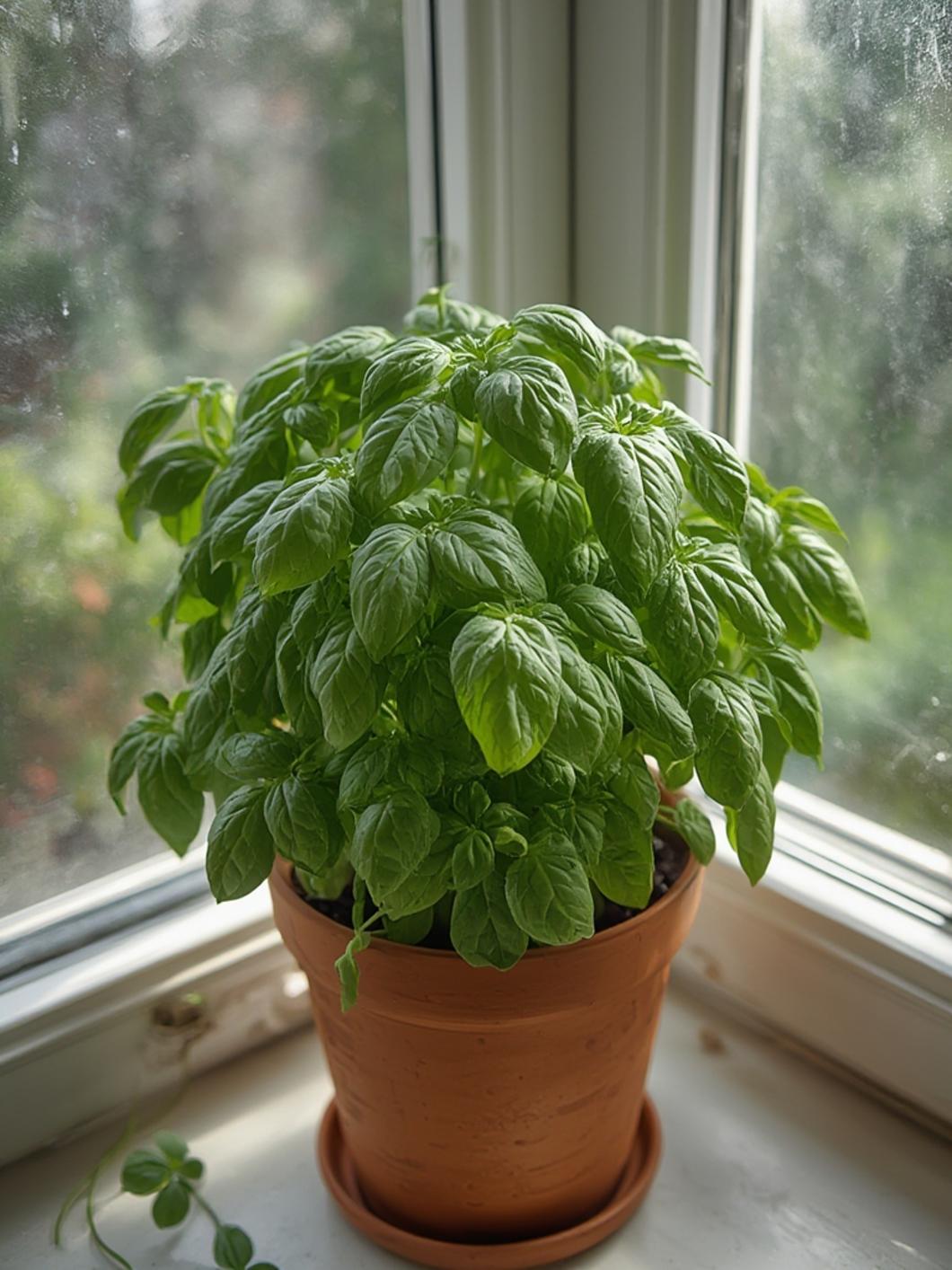
Have you ever wandered through a grocery store, spotted those tiny plastic containers of fresh basil priced at $3-4, and thought there must be a better way? Growing your own basil at home is not only cost-effective but also incredibly rewarding.
Table of Contents
The aromatic leaves can transform ordinary dishes into culinary masterpieces, and the process of nurturing this herb from seed to harvest brings a unique sense of satisfaction. basil for beginners doesn’t have to be intimidating with the right approach and beginner basil growing tips, you’ll be harvesting fresh leaves for your homemade pesto in no time.
Materials & Supplies
To start your basil-growing journey, you’ll need:
1. Basil seeds or seedlings – Sweet Genovese basil is the most popular variety for beginners
2. Potting soil – Opt for organic, well-draining soil with compost mixed in
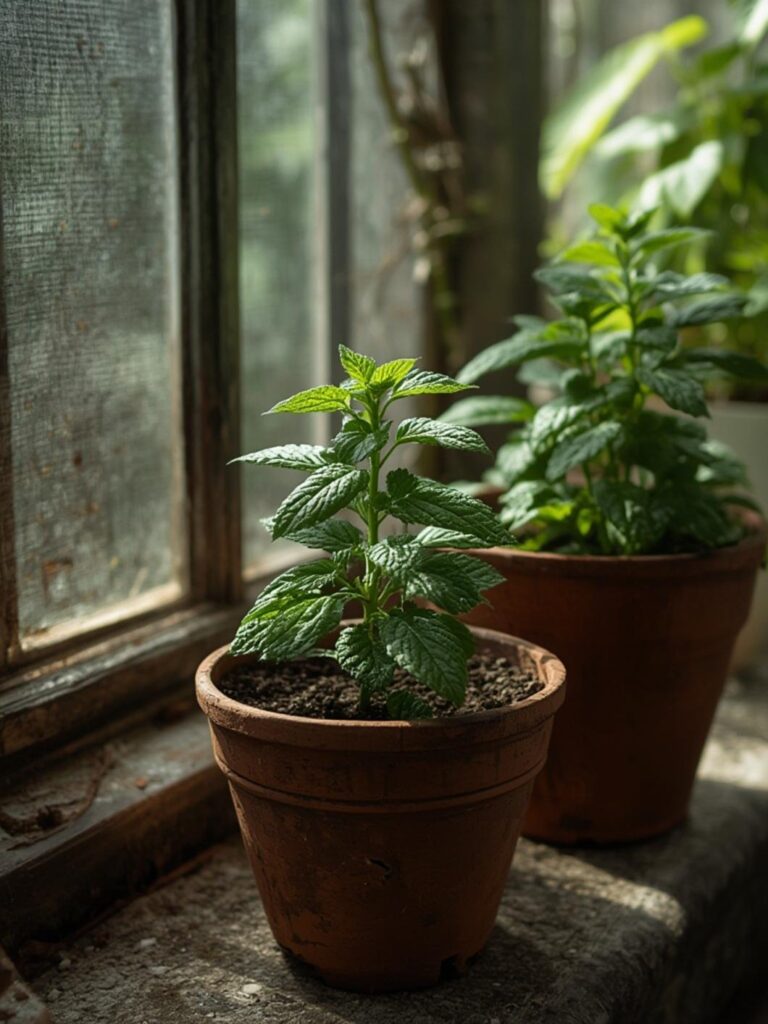
3. Containers – 6-8 inch pots with drainage holes (terracotta works well)
4. Watering can – With a gentle sprinkle spout to avoid disturbing young plants
5. Liquid fertilizer – Organic, diluted to half-strength for herbs
6. Pruning scissors – Clean and sharp for harvesting
7. Plant markers – To identify different varieties if growing multiple types
8. Spray bottle – For misting seedlings during early growth stages
9. Sunny windowsill or outdoor space – Basil needs 6-8 hours of sunlight daily
Timing / Growing Schedule
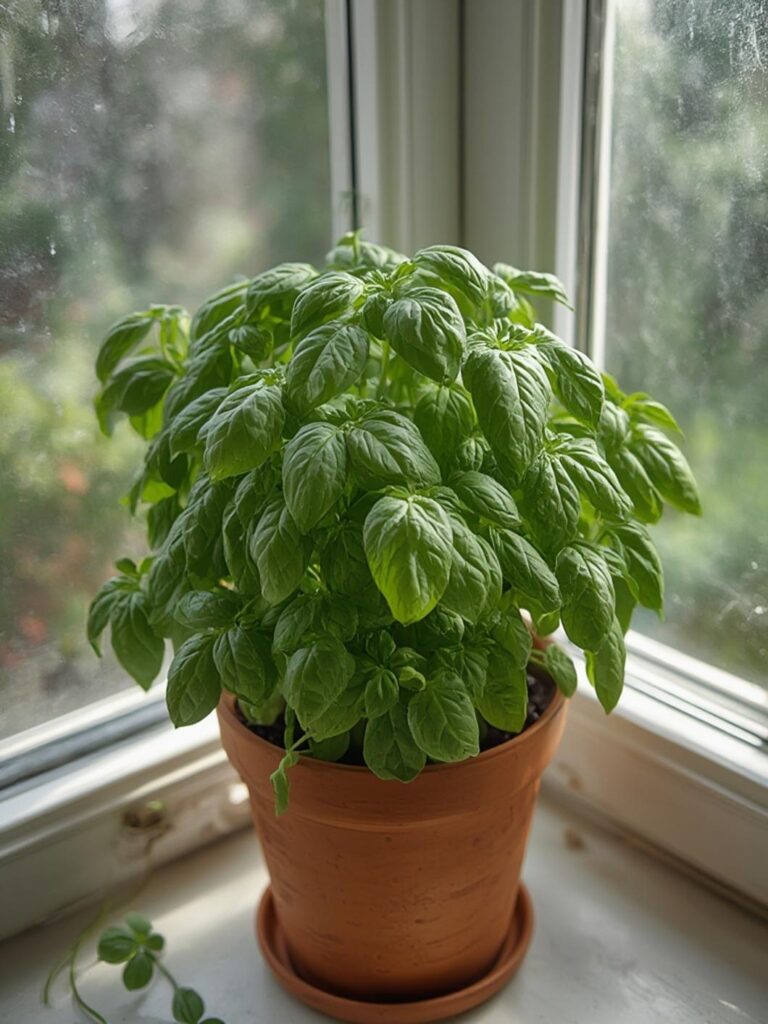
Basil is a warm-weather annual herb that thrives when temperatures consistently stay above 50°F (10°C). Here’s a typical timeline:
– Seed germination: 5-10 days at 70-80°F (21-27°C)
– Seedling stage: 3-4 weeks before transplanting
– Growth to harvest: 6-8 weeks from transplanting
– Total time from seed to first harvest: Approximately 60-80 days
– Growing season: Late spring through summer until first frost
For year-round fresh basil, start new plants every 3-4 weeks indoors. Most regions should start seeds indoors 6 weeks before the last expected frost date.
Step-by-Step Instructions
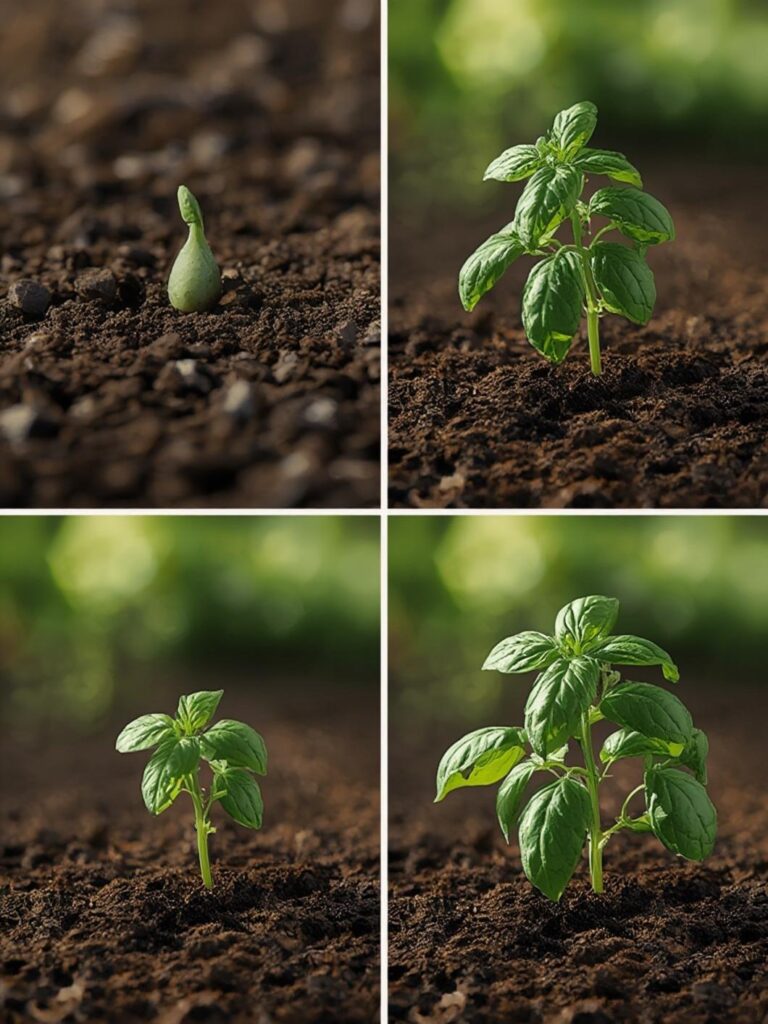
1. Start seeds indoors: Plant seeds ¼ inch deep in moist potting soil. Cover lightly with soil and mist with water. Keep soil consistently moist but not soggy.
Pro tip: Cover seed trays with plastic wrap to create a greenhouse effect and speed germination.
2. Provide adequate light: Once seedlings emerge, ensure they receive at least 6 hours of direct sunlight daily or use grow lights positioned 3-4 inches above plants.
Pro tip: Rotate containers every few days to prevent leaning toward light sources.
3. Transplant carefully: Once seedlings have 2-3 sets of true leaves and outdoor temperatures remain above 50°F at night, gradually acclimate them to outdoor conditions over 7-10 days.
Pro tip: When transplanting basil for beginners, space plants 12-18 inches apart to allow for proper air circulation and follow beginner basil growing tips about watering deeply but infrequently to encourage strong root development.
4. Water properly: Keep soil consistently moist but never waterlogged. Water at the base to avoid wetting leaves.
Pro tip: Morning watering allows any splashed leaves to dry during the day, preventing fungal issues.
5. Harvest correctly: Begin harvesting when plants are 6-8 inches tall. Pinch or cut stems just above a leaf node to encourage bushing.
Pro tip: Regular harvesting promotes continued growth and prevents flowering, which makes leaves bitter.
Nutritional Benefits / Advantages
Basil isn’t just delicious; it’s nutritious too! This aromatic herb contains:
– Vitamin K for bone health and blood clotting
– Vitamin A for immune function and vision
– Manganese for metabolism and antioxidant function
– Anti-inflammatory compounds like eugenol
– Essential oils with antibacterial properties
– Antioxidants that help reduce oxidative stress
Growing your own ensures you have the freshest herbs with maximum flavor and nutritional content, free from pesticides and packaging waste.
Tips, Alternative Methods, or Gardening Advice
– Container growing: Perfect for apartments or small spaces. Use a minimum 6-inch pot for a single plant.
– Companion planting: Basil grows well alongside tomatoes, peppers, and marigolds.
– Indoor growing: Place on a south-facing windowsill or under grow lights for year-round harvests.
– Hydroponic options: Basil thrives in water-based growing systems, making it ideal for beginners to hydroponics.
– Multiple varieties: Try Thai basil, purple basil, or lemon basil for culinary diversity.
Common Mistakes to Avoid
1. Overwatering: Causes yellowing leaves and root rot. Solution: Allow soil to dry slightly between waterings.
2. Inadequate sunlight: Results in leggy, weak plants. Solution: Ensure 6-8 hours of direct sunlight daily.
3. Letting plants flower: Causes bitter-tasting leaves and slowed growth. Solution: Pinch off flower buds as soon as they appear.
4. Cold exposure: Basil is extremely sensitive to cold. Solution: Bring plants indoors when temperatures drop below 50°F.
5. Harvesting incorrectly: Taking too many leaves at once stresses plants. Solution: Never harvest more than 1/3 of the plant at once.
Storage / Maintenance Tips
– Pruning: Regularly pinch the top sets of leaves to encourage bushy growth
– Fertilizing: Apply diluted liquid fertilizer every 4-6 weeks
– Storing fresh basil: Place stems in water like a bouquet (not in refrigerator) or wrap leaves in slightly damp paper towels
– Preserving: Freeze chopped basil in olive oil using ice cube trays, or dry leaves in a well-ventilated area away from direct sunlight
– Pest management: Watch for aphids and treat with a gentle spray of soapy water if needed
Conclusion
Growing basil at home is a rewarding experience that connects you with your food while saving money and reducing waste. Whether you’re creating homemade pesto, garnishing summer salads, or adding fresh flavor to pasta dishes, there’s nothing quite like harvesting herbs you’ve grown yourself. basil for beginners is an ideal starting point for novice gardeners, as it grows relatively quickly and provides abundant feedback on your care techniques. By following these beginner basil growing tips, you’ll be well on your way to herb gardening success. Why not start your basil adventure today? We’d love to hear about your experiences and see photos of your thriving basil plants in the comments below!
FAQs
Why are my basil leaves turning yellow?
Yellowing leaves typically indicate overwatering, nutrient deficiency, or insufficient light. Ensure your soil drains well, consider adding diluted fertilizer, and confirm your plant receives at least 6 hours of sunlight daily.
How often should I harvest my basil plant?
Regular harvesting (weekly during peak growth) encourages bushier growth. Never remove more than one-third of the plant at once, and always cut just above a leaf node.
Can basil be grown indoors year-round?
Yes! With sufficient light (a sunny south-facing window or grow lights), appropriate watering, and occasional fertilizing, basil can thrive indoors throughout the year.
Why is my basil plant getting tall and leggy?
Legginess indicates insufficient light and/or lack of proper pruning. Increase light exposure and regularly pinch the tops to encourage lateral growth and a bushier habit.
What’s the best way to prevent basil from flowering?
Regular harvesting is key to preventing flowering. Pinch off flower buds as soon as they appear, focusing on removing the top sets of leaves to encourage bushier growth.