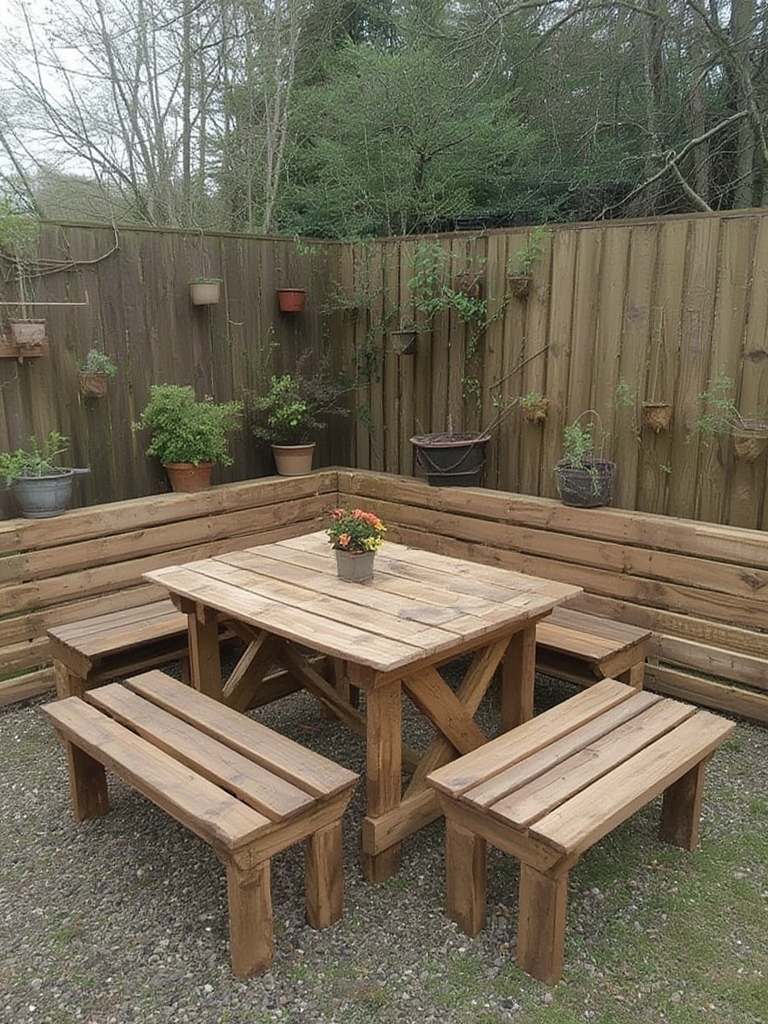
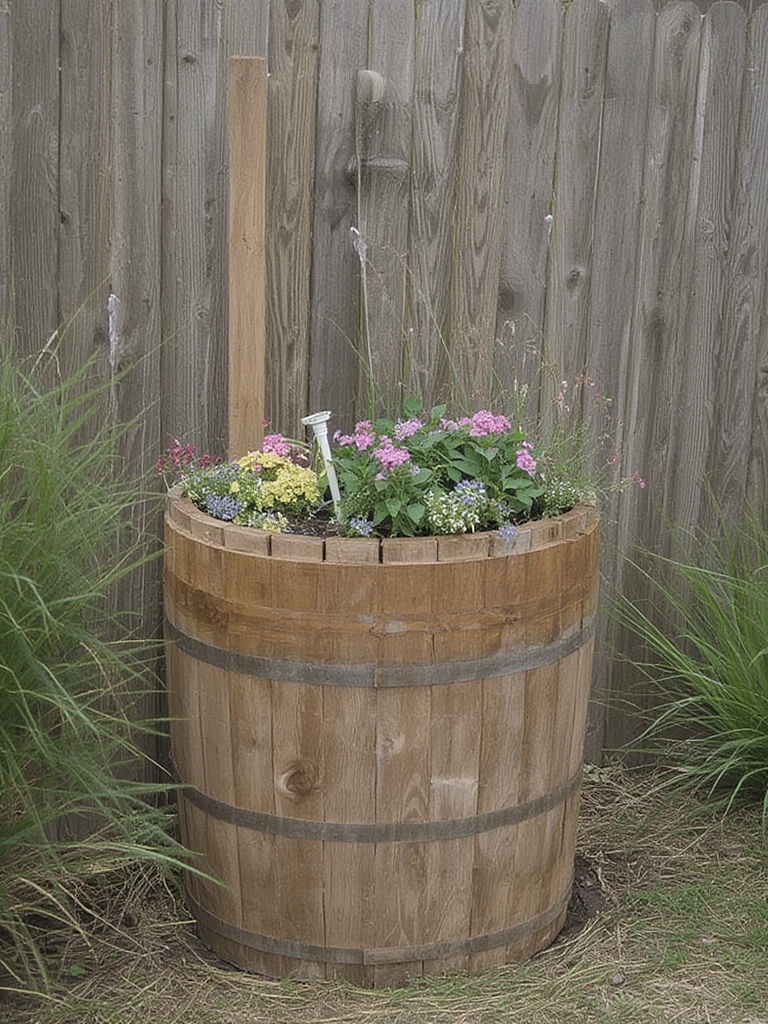
Have you ever wished for a way to conserve water while simultaneously enhancing your garden’s beauty? Imagine transforming ordinary rain collection systems into stunning garden features that serve double duty. By creating a rain barrel planter,
you can capture precious rainwater for your garden while creating an eye-catching display of flowers, herbs, or vegetables. According to the EPA, a properly installed rain barrel can save approximately 1,300 gallons of water during peak summer months—water that would otherwise be wasted as runoff.
Table of Contents
Innovative Rain Barrel Planter Ideas: Combine Water Storage with Garden Beauty
Materials & Supplies
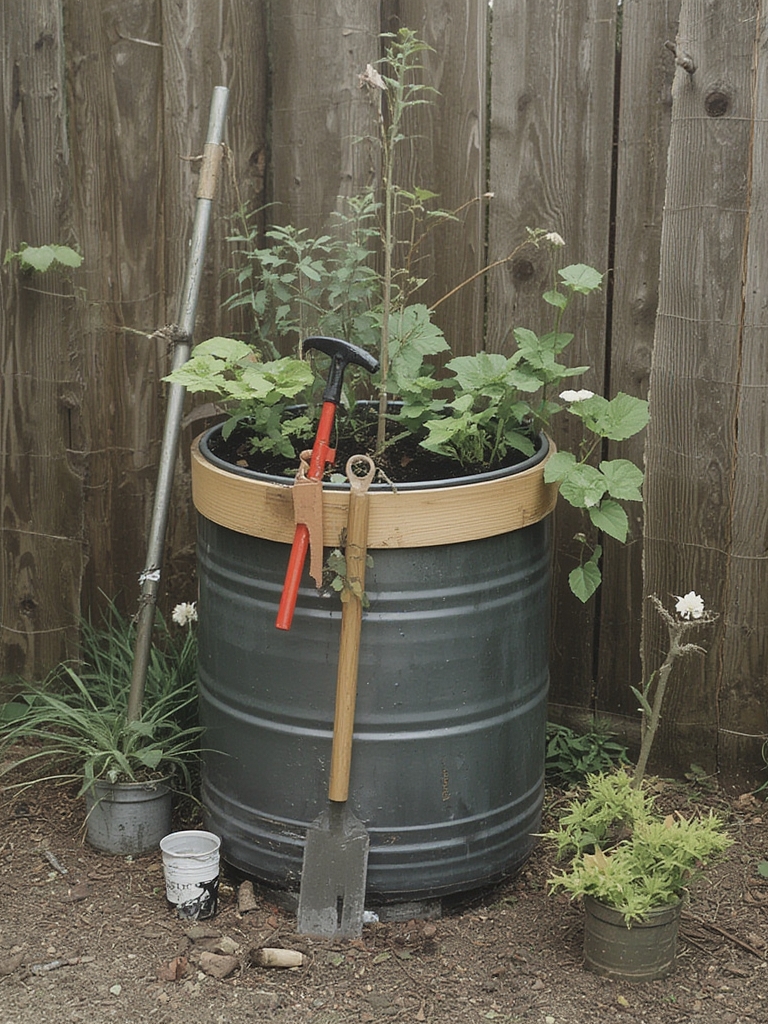
To create your own water-saving garden feature, you’ll need:
- 55-gallon food-grade plastic barrel or wooden rain barrel
- Drill with various bit sizes (¼”, ½”, and 1″ spade bit)
- Spigot kit with rubber washer and locknut
- Overflow fitting and hose
- Window screen mesh (to prevent mosquito breeding)
- Circular planter that fits on top of barrel
- Potting soil and plants
- PVC pipe or downspout diverter
- Concrete blocks or sturdy platform (for elevation)
- Caulking gun and waterproof silicone
- Sandpaper (if using wooden barrel)
- Optional: Exterior paint suitable for your barrel material
For those seeking convenience, complete rain barrel garden, water collection planter, eco friendly garden, sustainable gardening, repurposed barrel ideas kits are available that include most components needed for assembly.
Timing / Growing Schedule
Setting up your rain barrel planter system takes approximately 2-3 hours, not including drying time for paint or sealants. The best time to install is early spring before the rainy season begins, giving you maximum collection potential throughout the growing season. In regions with year-round rainfall, you can install anytime, but avoid freezing temperatures during setup as they can affect sealant curing. Remember that a 55-gallon barrel fills surprisingly quickly—even a moderate rainfall of ½ inch on a 1,000-square-foot roof can yield over 300 gallons of water!
Step-by-Step Instructions
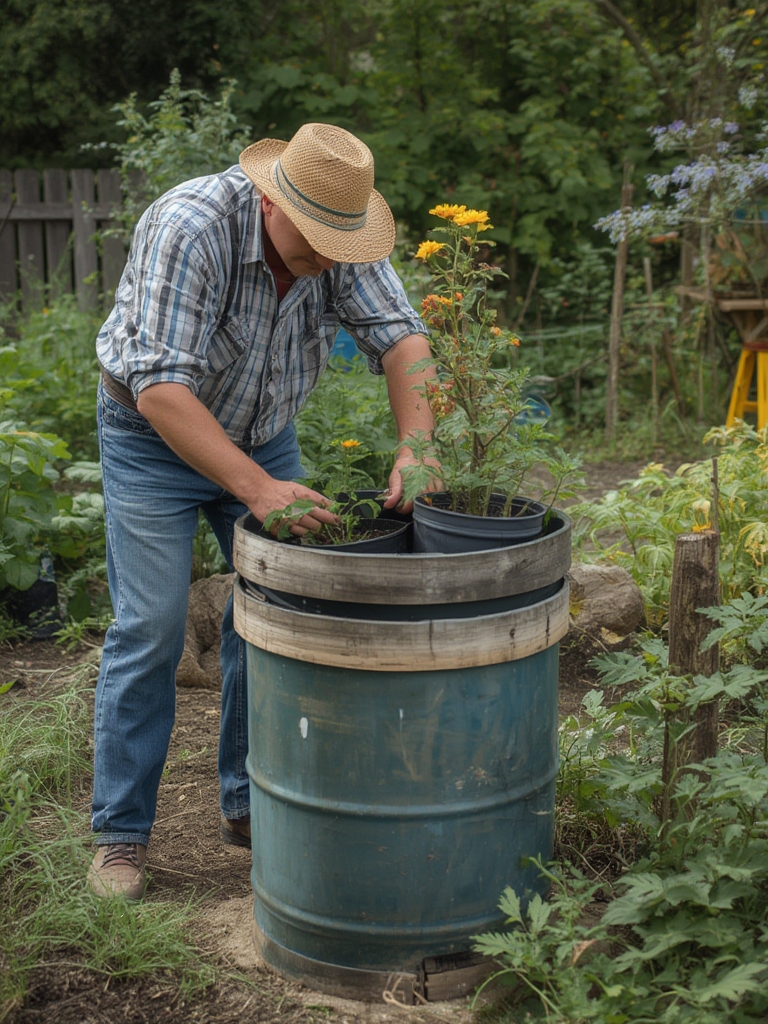
Prepare your barrel: Clean thoroughly with mild soap and water. If using a wooden barrel, sand rough areas and seal with weather-resistant sealant. For plastic barrels, consider painting with exterior paint for UV protection and aesthetic appeal.
Install the spigot: Drill a hole about 4-5 inches from the bottom using your 1″ spade bit. Insert the spigot with rubber washer on the outside and secure with the locknut on the inside. Apply silicone sealant around connections to prevent leaks.
Create an overflow outlet: Drill a hole near the top of the barrel using your 1″ bit. Install the overflow fitting and attach a hose directed away from your home’s foundation.
Add mosquito protection: Cut a piece of window screen mesh to cover the barrel top, securing it with a bungee cord or the barrel’s rim if it has a removable top.
Set up the planter: Position your circular planter on top of the barrel. Drill several small drainage holes in the planter bottom to allow excess water to drain into the barrel.
Elevate your system: Place your barrel on concrete blocks or a sturdy platform to increase water pressure and allow easy access to the spigot.
Connect to downspout: Install your downspout diverter according to manufacturer instructions to direct rainwater into your barrel.
Plant your garden: Fill the top planter with potting soil and add your chosen plants. Cascading flowers like petunias, sweet potato vine, or trailing herbs work beautifully.
Advantages
Beyond water conservation, your rain barrel planter provides numerous benefits:
- Reduces water bills by up to 40% during growing season
- Decreases stormwater runoff that can carry pollutants
- Provides chlorine and chemical-free water ideal for sensitive plants
- Creates a self-watering system during dry spells
- Adds unique visual interest to your garden landscape
Tips, Alternative Methods, or Gardening Advice
For small spaces, consider a wall-mounted slim-line rain barrel with a vertical garden attachment. In drought-prone areas, connect multiple barrels in series for increased capacity. For contemporary landscapes, consider sleek, modern rain barrel designs or disguise utilitarian barrels with decorative screens or trellis panels for climbing plants.
Common Mistakes to Avoid
- Inadequate filtering: Always use a debris screen to prevent clogging.
- Improper elevation: Barrels need height for gravity-fed water pressure.
- Neglecting overflow provisions: Without proper overflow channels, excess water can damage foundations.
- Forgetting winter preparation: In cold climates, drain and disconnect barrels before freezing temperatures arrive.
Storage / Maintenance Tips
Clean your barrel system annually by emptying completely, removing debris, and rinsing with a 1:10 vinegar-water solution. Check all connections and seals each spring. For wooden barrels, apply protective sealant yearly to prevent rot and leaks. During growing seasons, monitor your planter’s moisture levels—the soil shouldn’t remain soggy, which can lead to root rot.
Conclusion
Creating a rain barrel planter is an ingenious way to practice sustainable gardening while enhancing your outdoor space. With minimal investment and a few hours of work, you can build a system that conserves water, reduces runoff, and provides a beautiful focal point in your garden. Why not start collecting those precious raindrops today and turn them into blooming beauty tomorrow?
FAQs
How much water can I save with a rain barrel planter system?
A single 55-gallon rain barrel connected to a 1,000 square foot roof can fill completely during a 1-inch rainfall event, potentially saving 30% of household water usage during summer months.
Will my rain barrel attract mosquitoes?
Not if properly screened. Always use fine mesh over all openings and ensure your barrel is sealed except for intended inputs and outputs.
Can I drink water collected in my rain barrel?
No. Rain barrel water should only be used for irrigation purposes as it may contain contaminants from your roof surface.
How do I winterize my rain barrel planter?
In freezing climates, disconnect the barrel, empty completely, clean thoroughly, and store upside down or indoors during winter months to prevent cracking.