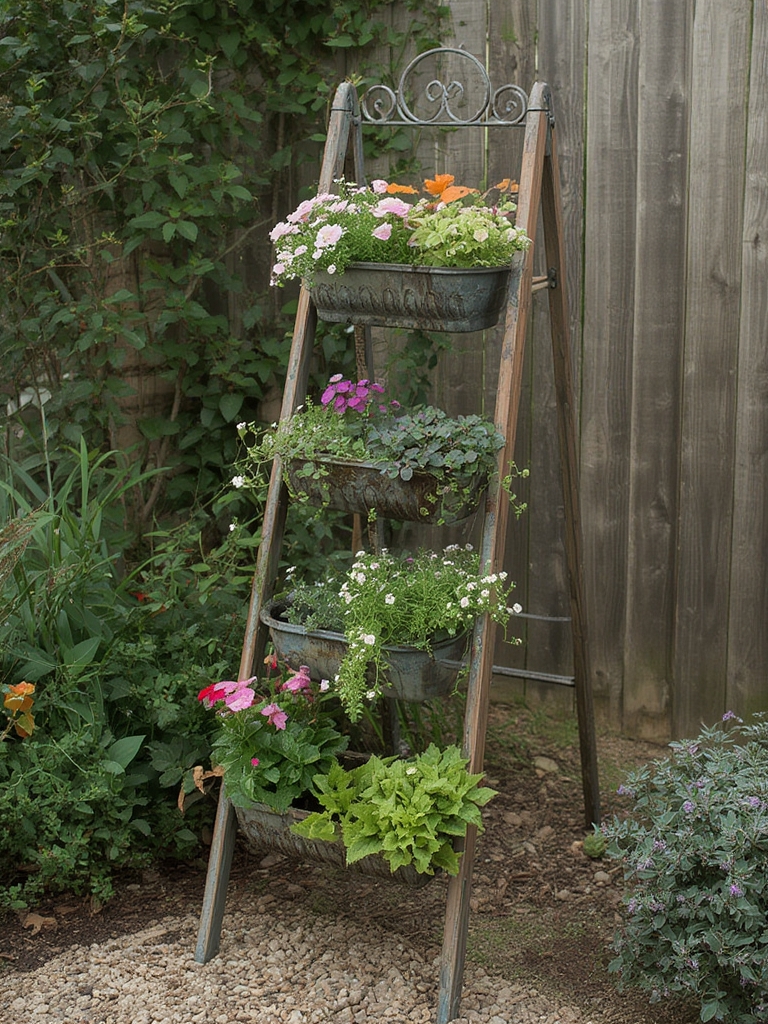
Are you struggling to find space for all your beloved plants? Imagine transforming an old wooden ladder into a charming display that showcases your green collection while saving precious garden space. A garden ladder planter offers the perfect solution for gardeners with limited space or those looking to add visual interest to their outdoor areas.
According to a 2023 gardening trends report, vertical gardening solutions have increased in popularity by 34% as urban gardening continues to grow. Let’s explore how you can create your own stunning ladder display that adds both functionality and rustic charm to your garden.
Table of Contents
DIY Garden Ladder Planter: Repurpose Old Ladders for Vertical Displays
Materials & Supplies
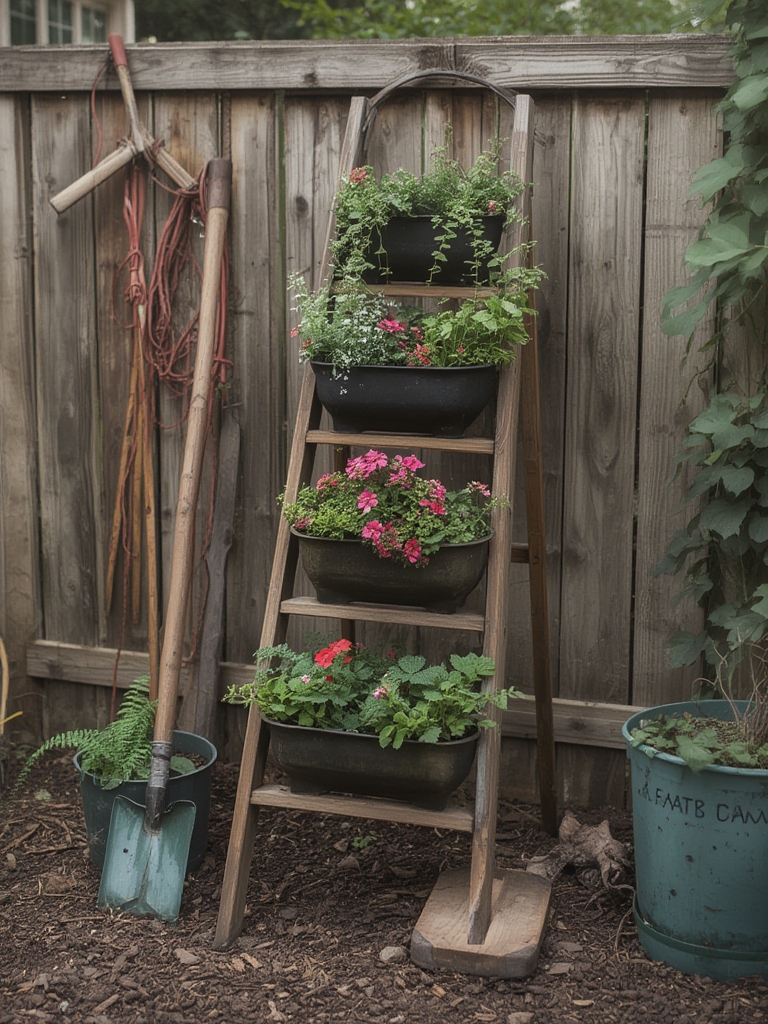
- Wooden ladder (old wooden stepladder or painter’s ladder works best)
- Sandpaper (medium and fine grit)
- Exterior wood paint or stain (weather-resistant)
- Paintbrush and small roller
- Measuring tape
- Drill with bits
- Screws (weather-resistant)
- Optional: Wood sealer for additional protection
- Assorted pots or planters that fit ladder steps
- Potting soil
- Selection of plants (cascading varieties work well)
- Decorative elements (optional): fairy lights, small garden ornaments
Timing / Growing Schedule
Preparation and construction time: 1-2 days (including drying time)
Assembly and planting: 2-3 hours
Best season to build: Spring or early summer gives your plants the full growing season to establish
Unlike building a raised bed which can take a full weekend, this project can be completed in just one day, making it perfect for a weekend DIY project.
Step-by-Step Instructions
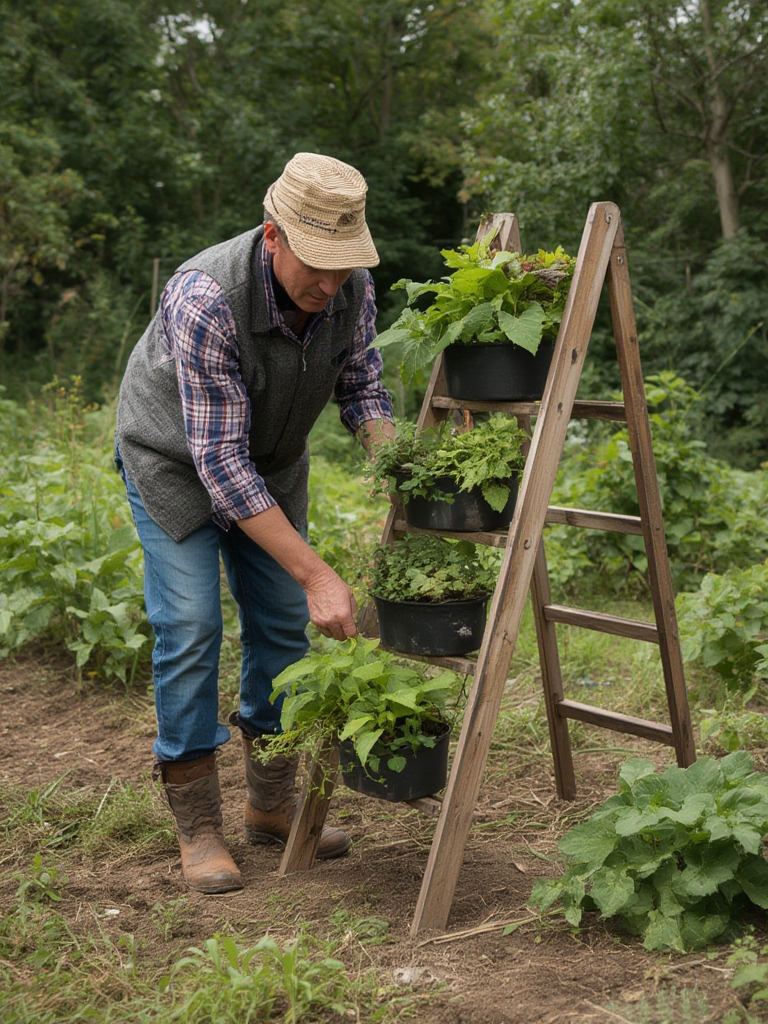
Prepare your ladder: Thoroughly clean your ladder and sand down any rough spots or splinters. Pay special attention to steps where planters will sit.
Apply protection: Apply 2-3 coats of weather-resistant paint or stain. For extra longevity, use a clear sealer after the paint has dried. Pro tip: Choose a color that complements your garden scheme or go with classic white for a cottage garden feel.
Check stability: Ensure your ladder stands firmly on level ground. For added stability on uneven surfaces, consider attaching small wooden blocks to legs that need leveling.
Arrange your pots: Place potted plants on various steps of the ladder. Alternate heights and cascading plants for visual interest. For better weight distribution, position larger plants on lower rungs.
Secure planters: For windy areas, secure pots to the ladder steps using small brackets or garden wire to prevent tipping.
Add personalized touches: Consider adding decorative elements like solar-powered fairy lights, small garden ornaments, or hand-painted signs to enhance your display.
Advantages
Creating a ladder plant stand, tiered planter ideas, vertical flower display, rustic garden decor, repurposed ladder garden offers multiple benefits:
- Maximizes growing space by utilizing vertical dimensions
- Creates visual interest with multi-level displays
- Provides different sun exposure levels for various plant needs
- Easy to move or reconfigure as needed
- Adds vintage charm and character to garden spaces
- Sustainable upcycling of otherwise discarded items
- Improves accessibility for those with limited mobility
Tips and Alternative Methods
- For indoor use, place a plastic tray under each pot to catch water
- Consider painting different ladder steps in complementary colors for a playful look
- For small balconies, use a library ladder attached to a wall to save floor space
- In extremely sunny locations, position your ladder where it receives morning sun but afternoon shade
- For herb gardens, label each step with the herb variety using small chalkboard signs
Common Mistakes to Avoid
Ignoring weight distribution: Don’t place all heavy plants on one side, which can cause tipping. Balance weight evenly across the ladder.
Forgetting drainage: Ensure pots have proper drainage holes and the ladder is positioned where water can flow away freely.
Neglecting wood treatment: Untreated wood will rot quickly outdoors. Always seal or paint your ladder thoroughly.
Poor plant selection: Choose plants appropriate for the light conditions where your ladder will stand.
Maintenance Tips
- Inspect your ladder planter quarterly for signs of wear or weathering
- Apply a fresh coat of sealer annually to protect the wood
- During winter months in cold climates, either bring wooden ladders indoors or cover with a waterproof tarp
- Regularly rotate plants to ensure even growth and sun exposure
- Check for stability after heavy rains or storms
Conclusion
Your DIY garden ladder planter brings charm, functionality, and personality to your outdoor space while making efficient use of vertical gardening principles. This weekend project transforms an ordinary ladder into a stunning garden focal point that showcases your plants beautifully. Start collecting those planters and revive an old ladder to create your own vertical garden masterpiece!
FAQs
How do I prevent my ladder planter from tipping over?
Place heavier plants on lower rungs and consider securing the ladder to a wall or fence if it’s in a particularly windy location.
Can I use a metal ladder instead of wood?
Yes! Metal ladders work well but may need rust-resistant paint and might become hot in direct sunlight, potentially damaging plant roots.
What plants work best for a ladder planter?
Cascading plants like trailing petunias, ivy, and strawberries work wonderfully. Mix with upright plants like herbs or small ornamental grasses for contrast.
How long will my wooden ladder planter last outdoors?
With proper sealing and annual maintenance, a wooden ladder planter can last 5-8 years outdoors before needing significant repairs.